The electric vehicle revolution has a looming second act: what happens to the batteries. A typical EV pack contains lithium, nickel, cobalt, manganese and graphite worth real money and real environmental concern, lasts a decade or more on the road, and then must go somewhere. Recycling those packs — recovering their metals to battery grade and putting them back into new cells — has become one of the most strategically important industries most people have never heard of.
The timing is structural. The first mass wave of EVs reaches retirement through the 2030s, regulation in Europe now mandates recycled content and collection, and every major battery economy — China, the EU, the United States — is racing to keep critical minerals circulating at home rather than mined abroad. Analysis by the International Energy Agency treats recycling as a pillar of mineral security, a story followed in our Technology section.
How a Battery Gets Recycled
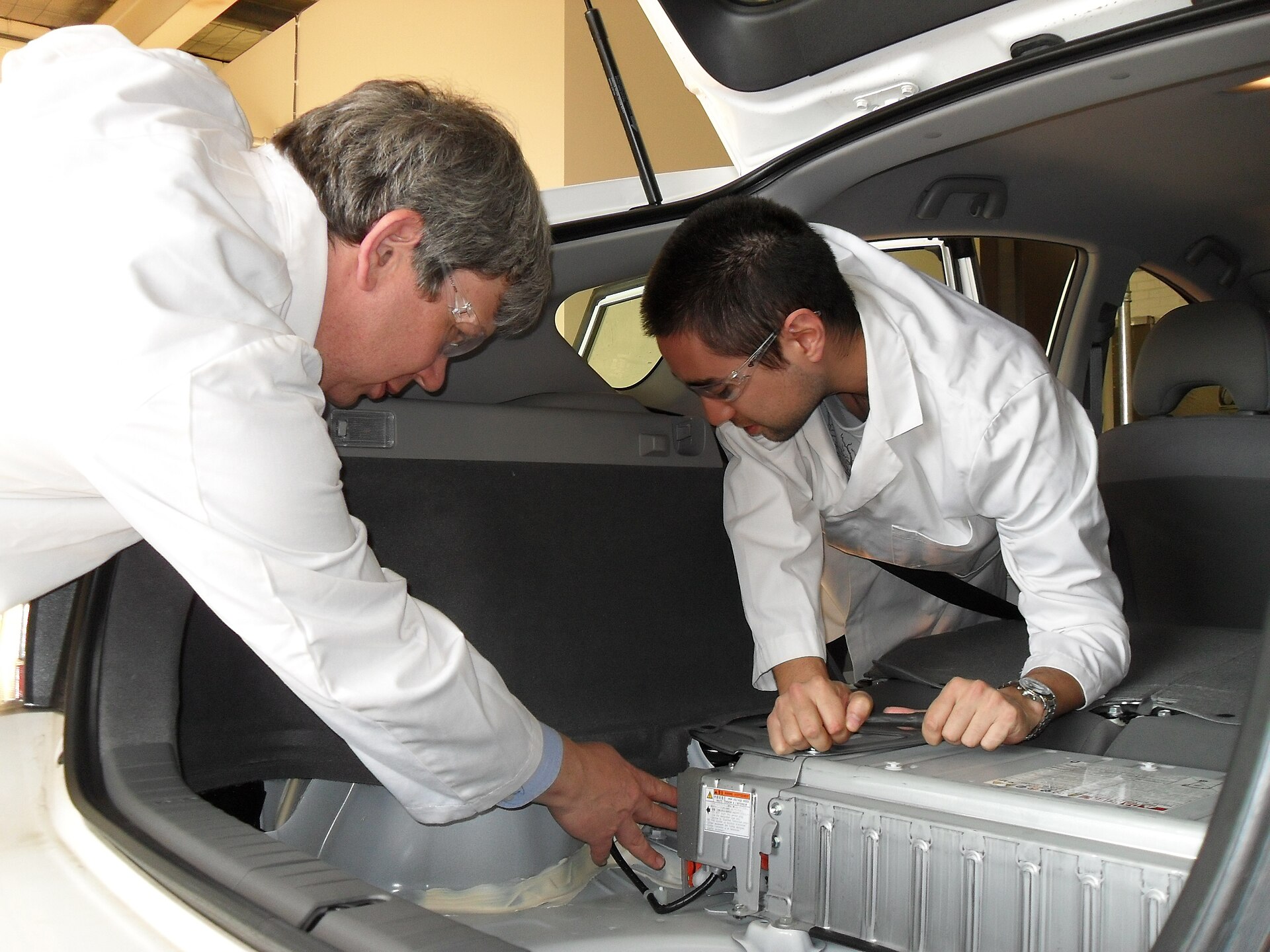
The process begins unglamorously: packs are discharged, dismantled and shredded under controlled conditions into ‘black mass’, a powder rich in the valuable metals. From there, two main refining routes compete. Pyrometallurgy burns material at high temperature — robust and proven, but energy-hungry and historically lossy for lithium. Hydrometallurgy leaches the metals out chemically at lower temperatures, recovering lithium and achieving the high recovery rates — above ninety percent for nickel and cobalt — that new EU rules increasingly demand.
A detour is growing in importance: second life. Packs retired from cars typically retain seventy to eighty percent of capacity — inadequate for driving, ample for stationary storage supporting solar farms, buildings and grids. Reuse before recycling stretches the value and delays the waste stream, though it complicates eventual collection. The industry’s emerging shape is a cascade: vehicle, then storage, then the shredder, then a new vehicle — the circular economy drawn as a loop with three stops.
The Economics and the Rules
Recycling lives or dies on metal prices and feedstock. When lithium prices spiked, recyclers were profitable darlings; when prices crashed, margins thinned and some ventures failed, teaching the sector that it is a commodity business wearing a technology costume. What stabilises it is regulation: the EU Battery Regulation phases in collection targets, recovery efficiencies, recycled-content mandates for new batteries and battery passports tracing materials — creating guaranteed demand for compliant recycled metals whatever the spot price does.
Europe’s strategic motive is explicit. The continent mines little lithium, nickel or cobalt but will retire millions of battery packs; urban mining of its own fleet is the closest thing to a domestic mine it can legislate. Romania and its neighbours, with automotive industries and growing battery investments, are positioning for a share of the collection and processing chain, as Romania Wire has reported — the shredders and refineries will cluster where the cars, the factories and the rules meet.
Why It Matters Beyond the Car Industry
Battery recycling is a template for the wider material challenge of the energy transition: solar panels, wind turbines and electrolysers all embody critical materials whose supply is concentrated and contested. Demonstrating a profitable, high-recovery loop for the largest and most valuable of those products — the EV pack — proves the model that climate policy increasingly assumes. It also reframes the EV’s environmental ledger: a car whose battery is ninety-plus percent recovered into new batteries is a different proposition from one whose pack is landfilled or exported as waste.
The work ahead is scale and standards: collection logistics for millions of dispersed packs, safe transport of damaged batteries, design-for-recycling by manufacturers, and refining capacity built ahead of a retirement wave whose exact timing depends on how long today’s EVs actually last. The companies and countries building that capacity now are buying their place in the next decade’s battery supply chain. The lithium, after all, is not going anywhere — the race is over who gets to use it twice.