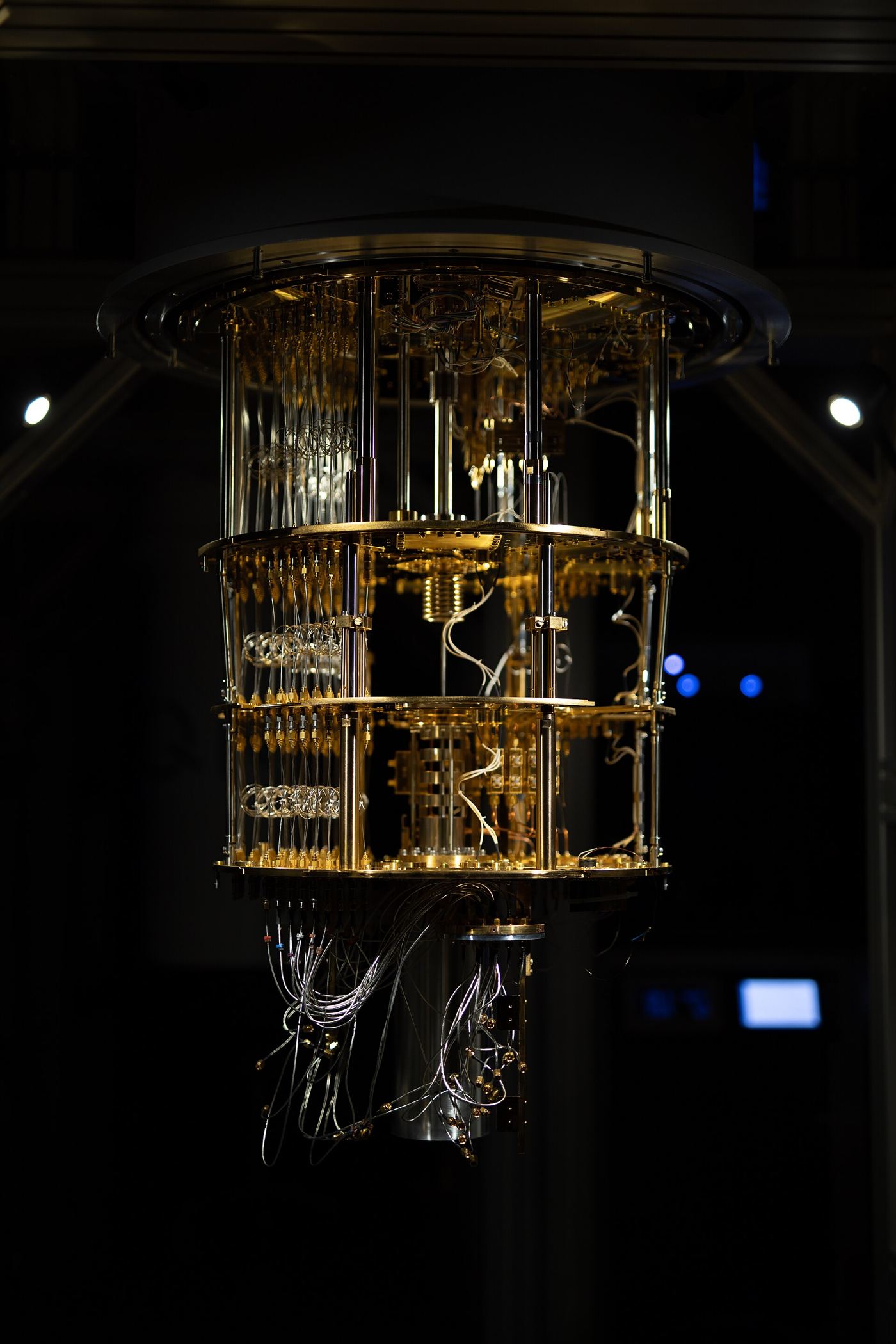
In December 2024, Google announced a quantum computing chip that crossed a threshold researchers had chased for almost 30 years. The chip, called Willow, has 105 qubits, the quantum bits that carry out calculations, and in a test published in Nature it did something no previous machine had managed: as Google added more qubits, the error rate went down instead of up. That matters because quantum computers are famously fragile, and errors have always grown as the machines got bigger, making them useless for real problems. Willow’s error correction, known as operating below threshold, is the first step toward quantum computers that can run for hours without their calculations falling apart. Google also reported that Willow completed a benchmark calculation in under five minutes that would take the world’s fastest supercomputer about 10 septillion years, a figure so large it dwarfs the age of the Universe.
What the Evidence Shows
The benchmark was chosen to show off the hardware, not to solve a useful problem, and critics were quick to point out that no practical task has yet been run on Willow. Real applications, such as designing new drugs or breaking encryption, will need thousands or millions of error-corrected qubits, far beyond the 105 on Willow. But the error-correction result is the part that matters, because it answers the question that has haunted the field: whether errors can be beaten at all as machines scale. Google, IBM, Microsoft and a wave of startups are now racing to build the first fault-tolerant quantum computer, and Willow has set the pace. The prize is a machine that can do in minutes what would take ordinary computers longer than the history of the Universe. Reporting and analysis from sources such as Wired track the same developments, and specialists following Google Willow quantum chip say the direction is now consistent across independent lines of evidence.
The Wider Context
The wider context is an industry learning to ship capability and restraint together. Products built around Google Willow quantum chip now launch with safety evaluations, usage data and rollback plans as standard, because enterprise buyers and regulators ask for them in the first meeting. Companies that treated those questions as friction are discovering they have become the purchase criteria.
What Happens Next
What happens next for Google Willow quantum chip depends less on another breakthrough than on the unglamorous work of reliability, pricing and support. The buyers evaluating it now are not enthusiasts; they are operators with budgets and auditors, and their checklists will decide the timeline. On the evidence of the current pilots, the technology has earned the right to be judged by them. You can follow related developments in our coverage of technology.
None of this will be settled by a single announcement, study or product launch. The pattern to watch is accumulation: independent confirmations, honest reporting of failures and steady improvement in the underlying numbers. Readers who follow those signals, rather than the loudest claim of the week, will understand this subject better than most of the commentary surrounding it suggests is possible.